Showing posts with label History of London. Show all posts

Tuesday, May 26, 2009

Overwhelming Oxford Circus Tube Station

A London Underground station, named The Oxford Circus Tube Station serves the Oxford Circus at the Regent Street and Oxford Street junction and all the four corners of intersection been equipped with the entrances. An interchange is present within the station between the Victoria, the Central and the Bakerloo Lines. It is well known as the third busiest network and the busiest to the National Rail Service without a connection.

It is positioned between the Bond Street and Tottenham Court Road on the Central line. It is situated between the Piccadilly Circus and the Regent’s Park and between Warren Street and Green Park on the Victoria Line.
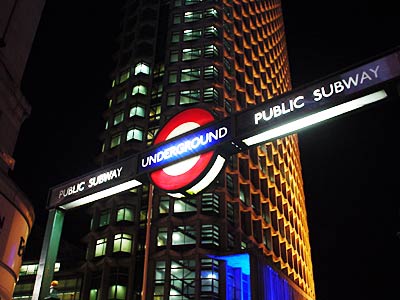


History of Oxford Tube Station
On the Central London Railway, the station got opened on 30 July 1900 with Baker Street and Waterloo Railway’s Platforms opening on 10 March 1906. There were separate lift shafts and buildings. The exits from the stations which were the station buildings were built on very restrained plots at either side of Argyll Street and in the south of Oxford Street only to the east of the circus. The stations were constructed originally as completely separated ones and later connected through passages which that were swiftly employed at the platform. To the east of Argyll Street, a Central London Railway building is the popular surviving illustration of the stations created by Harry Bell Measures and an example of a standard Leslie Green structure is the Bakerloo building to the west.

Refurbishment of Station
After a lot of planning and discussions between the two individual operators, a major refurbishment began in 1912. This resulted in the construction of a new ticket hall in Bakerloo station’s basement. The replacement of the Bakerloo station’s lift with deep level escalators took place down to the line level. Through the existing subways with deep level, access was provided to the Central Line. A number of improvements have been made since the outset of this station to keep in check the problems related to overcrowding to avoid difficulties for the commuters.

The refurbishment came into use in 1941 on 9 May with the facility of CLR elevators still available for passengers. By the beginning of the year 1923, this development was also rendered inefficient and to cope with the disorder caused at the station, a second refurbishment had to be commenced. This resulted in employment of escalator’s second set down to the Central Line and turning the CLR building into an exit only. Later in 1928, on 2nd October, a third escalator that led to the Central Line was built leading to the CLR station building becoming an exit only.

On 7 March 1969, The Victoria Line got opened. A new ticket hall was constructed in order to bear the overload of additional passengers under the road junction. To exhume the requirement of a new ticket hall under the roadway, diversion of traffic had to take place for five years on a momentary bridge like structure called as the “umbrella” enveloping the Regent Street/Oxford Street junction. To carry the telecom cables and water mains, services tunnels were constructed precedent the new ticket hall. Construction of the new shafts of escalators that form a link between the passages and the tunnels of the Victoria Line Station with platforms took place from access shafts sunk from the Cavendish Square, Argyll Street and Upper Regent Street.

The station has all the facilities like a cash machine, telephone booths, vending machines, a photo booth and many more.

Attractions
There are a number of attractions near the Oxford Circus tube station. If you have an eye for venturing into the area around Oxford Circus Tube Station take a look at these:
The London Palladium

is amongst the well known theaters in London and it is very closely located. Amongst the museums in London, Handel House Museum

is the one surrounding the Oxford Circus Tube station. There is a beautiful city district called Soho enchanted with beautiful ambience of an array of restaurants and pubs. Regent Street and Oxford Street are the hubs for shopping to give your shopaholic bug a high.

Tuesday, May 19, 2009

Holla Holborn

The name Holborn originates from the name of an underground river Holebourne, a branch of the current underground River Fleet. The tributary was a major route for goods from the Thames into the City and the area was referred to as ‘Holeburnstreete’ in 1249. Most of the buildings here have remained and survived from before the Great Fire of 1666, including the remarkable Staple Inn’s timber-framed façade.


Holborn is an ethnic hub of the legal profession. The historic legal centers, the Inns of Court, were situated here to denote the law as an arbitrator in the fight for power between Westminster and the city. The surroundings and the atmosphere of Holborn are still obtained from the four existing Inns: Gray’s Inn, Lincoln’s Inn, Inner Temple and Middle Temple. The passageways and courtyards of these Inns are a quite pool as compared to the eventful capital. The opulent neo-Gothic Royal Courts of Justice, civil courts are observed in the Strand and Chancery Lane is home to the Law society. The Royal Courts of Justice have a huge impact to terrify and scare even the innocent ones. This legendry court consists of 1,000 rooms and huge corridors, extending up to three and a half miles. Also, being the squadron of London’s Lawyers, Holborn is a workplace for many elite people who were financially sound spilling over the city, lawyers and a few journalists’ dawdlers of Fleet Street.

During 19th century, Holborn was struck with poverty like the rest of East London. Even though the area was attacked by a bomb blast during the Second World War, a number of historic buildings and magnificent architecture survived through the destructive times and escaped enormous destruction. At that moment, Holborn was popular for a quite a different subject– it was the house of London’s most talked about gay brothel. Molly house of Mother Clap was invaded in 1726 and she was sent to the stocks for aiding in sodomy.

Some of the world renowned writers who have resided in Holborn are Zadie Smith and Charles Dickens. Holborn has a limited green area, but during the afternoon, it is all occupied by the lawyers. Public members are permitted in the courtrooms of the Royal Courts of Justice, till the time they demonstrate an acceptable behavior.


Holborn Tube station


One of the underground stations in London, Holborn tube station is located on the Piccadilly Line between Russell square and Covent Garden. It is built at the High Holborn and Kingsway junction.

The station was designed and created by the Great Northern, Piccadily and Brompton Railway on 15 December 1906 with the name Holborn. A new road, cutting south from High Holborn named as Kingsway passed through an area of cleared slums to Strand. In spite of the fact that it was built by separate companies routes were planned and stations were located underground so that services could be interchanged. The junction connecting the High Holborn and the newly made Kingsway was a more prominent position for a station than that decided by the CLR.
The inauguration of the GNP&BR branch from Strand to Holborn station was postponed until November 30, 1907 by construction and design of the subway. Then there was a proposal to enhance the tunnels and make them larger under High Holborn to create new platforms at Holborn station and to abandon British Museum station. This proposal was included in a private bill presented to the parliament in November 1913.

Like a number of other central underground stations, Holborn station underwent a refurbishment in the early 1930s. The frontages at the station were designed and renovated by Charles Holden. A new spacious ticket hall was built and the lifts were removed and an access to four escalators was provided. These are the second largest escalators on the underground. There are a number of local attractions like museums, landmarks, etc in and around the Holborn tube station and for travelers, there are a number of restaurants and hotels that seriously would make a change in your concept of food and accommodation.

Wednesday, April 29, 2009

Famous Landmarks in London

Have you ever wondered how many beautiful and mesmerizing landmarks there are in London? London is a hub of captivating historical landmarks. Landmarks of a place demonstrate the richness in its magnificent history and ethnicity. There are some very interesting and unique landmarks in London:

Carnaby Street
If you are looking for some of the best designed clothes, lounges and bars, boutiques and cosmetic shops, Carnaby Street is the place to be in. There are outlets of the world famous brands like Animal and Diesel in its vicinity. If you seek stuff that is rare and has a good quality, and stuff that lasts long, you can travel to the best suited destination that is Carnaby Street. You can pay a visit to The Dispensary, where everything right from Elspeth Gibson to John Smedley is available for girls. Amazing footwear is also available at the Carnaby Street along with various restaurants and hotels, to the North West direction, Oxford Circus is the closest underground station just at the distance of approximately 6 minutes.


Fulham
Better known as the previous summer home of London’s Bishops during A.D.704 to 1973, to be precise, Fulham in London is one of the most beautiful palaces in London. While some parts of the palace were bejeweled by the Bishops in a very unique fashion, some of their designs are preserved and looks just the way they exactly were. If you are one of the admirers of history, this trip is a well worth. The dining room has a Palladian Ceiling and Great Hall is the oldest room in the palace and dates back to the fashion of 1480. The palace stand on the Bishop’s Park and covers 12 acres of gardens. In the West of the palace, is the initial point of Boat race of Cambridge and Oxford University.

Mayfair
Mayfair is located in the center of Piccadilly, Regent Street, Oxford Street and Hyde Park. Luxury car dealerships and expensive hotels are close to the clubs exclusively for members and the restaurants that are extremely trendy and up scale. Park Street and the New Bond lane are home to the luxurious and classy hotels in the area. There is also a superior class hair salon named as Nicky Clarkes’ where you can rest and pamper yourself while someone does your hair and you gaze from at the Bentley’s across the glass at the next showroom. There are a number of contemporary and luxurious hotels in the area. If you admire history, house number 48, down the street is the home of the Prime Minister Winston Churchill during the wartime.


Kings Cross District
Some very interesting attractions together constitute The Kings Cross district of London. The best part is a quick ride in bus that provides an entire day of touring and sightseeing. There are shopping malls and restaurants to have a quick meal or a small shopping spree in the middle of the tour. The gardens in the king cross street are very serene and calm and prove to be very soothing to human senses. There are five arches connected together to make one arch that’s large in size in Portland stone that marks a royalty route to St. Paul’s Cathedral. The arch’s center remains closed until the royalty passes through. However, to pedestrians and autos, the smaller arches remain open.

Victoria Embankment and Gardens
A project of the Metropolitan Board of Works, Victoria Embankment and gardens were completed in 1870. A modern sewage system was a major priority of London at that point of time and it was the main motive to construct this landmark. Narrowing of rivers was a demand of this project. In order to do the same, purchasing and bringing down the very expensive property at the riverside. Underneath the Embankments, tunnels were constructed. At ground level, two beautiful gardens were made along with the roads. The Victoria Embankment begins at the Westminster Bridge and follows the river bank towards the North of the Palace past Waterloo Bridge, Hungerford Bridge and stops at Black friars Bridge. The permanently anchored ships by Victoria Embankment include HQS Wellington and HMS President. Out of several others, Cleopatra’s attractions are spectacular ones.


All across the city, the inhabitants are very warm to the tourists. London is a very beautiful city and with some other landmarks like Buckingham Palace, London Eye, Tower of London and many other make the city of London a must to visit.