Showing posts with label London Tube stations. Show all posts

Tuesday, May 26, 2009

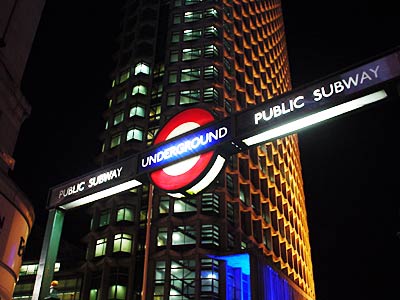
Overwhelming Oxford Circus Tube Station

A London Underground station, named The Oxford Circus Tube Station serves the Oxford Circus at the Regent Street and Oxford Street junction and all the four corners of intersection been equipped with the entrances. An interchange is present within the station between the Victoria, the Central and the Bakerloo Lines. It is well known as the third busiest network and the busiest to the National Rail Service without a connection.

It is positioned between the Bond Street and Tottenham Court Road on the Central line. It is situated between the Piccadilly Circus and the Regent’s Park and between Warren Street and Green Park on the Victoria Line.


History of Oxford Tube Station
On the Central London Railway, the station got opened on 30 July 1900 with Baker Street and Waterloo Railway’s Platforms opening on 10 March 1906. There were separate lift shafts and buildings. The exits from the stations which were the station buildings were built on very restrained plots at either side of Argyll Street and in the south of Oxford Street only to the east of the circus. The stations were constructed originally as completely separated ones and later connected through passages which that were swiftly employed at the platform. To the east of Argyll Street, a Central London Railway building is the popular surviving illustration of the stations created by Harry Bell Measures and an example of a standard Leslie Green structure is the Bakerloo building to the west.

Refurbishment of Station
After a lot of planning and discussions between the two individual operators, a major refurbishment began in 1912. This resulted in the construction of a new ticket hall in Bakerloo station’s basement. The replacement of the Bakerloo station’s lift with deep level escalators took place down to the line level. Through the existing subways with deep level, access was provided to the Central Line. A number of improvements have been made since the outset of this station to keep in check the problems related to overcrowding to avoid difficulties for the commuters.

The refurbishment came into use in 1941 on 9 May with the facility of CLR elevators still available for passengers. By the beginning of the year 1923, this development was also rendered inefficient and to cope with the disorder caused at the station, a second refurbishment had to be commenced. This resulted in employment of escalator’s second set down to the Central Line and turning the CLR building into an exit only. Later in 1928, on 2nd October, a third escalator that led to the Central Line was built leading to the CLR station building becoming an exit only.

On 7 March 1969, The Victoria Line got opened. A new ticket hall was constructed in order to bear the overload of additional passengers under the road junction. To exhume the requirement of a new ticket hall under the roadway, diversion of traffic had to take place for five years on a momentary bridge like structure called as the “umbrella” enveloping the Regent Street/Oxford Street junction. To carry the telecom cables and water mains, services tunnels were constructed precedent the new ticket hall. Construction of the new shafts of escalators that form a link between the passages and the tunnels of the Victoria Line Station with platforms took place from access shafts sunk from the Cavendish Square, Argyll Street and Upper Regent Street.

The station has all the facilities like a cash machine, telephone booths, vending machines, a photo booth and many more.

Attractions
There are a number of attractions near the Oxford Circus tube station. If you have an eye for venturing into the area around Oxford Circus Tube Station take a look at these:
The London Palladium

is amongst the well known theaters in London and it is very closely located. Amongst the museums in London, Handel House Museum

is the one surrounding the Oxford Circus Tube station. There is a beautiful city district called Soho enchanted with beautiful ambience of an array of restaurants and pubs. Regent Street and Oxford Street are the hubs for shopping to give your shopaholic bug a high.

Friday, May 22, 2009

Kooky World of King’s Cross St Pancras Tube Station

King’s Cross St. Pancras tube station on the London Underground network is in the London Borough of Camden, serving both St. Pancras and Kings Cross Station.
An extensive refurbishment had to be performed for the underground part of the station to increase the quantity of commuters through it. The ticket offices were closed for a long period in the main ticket hall until May 2006. The station, after getting expanded will have four more ticket halls, with the fourth expected to be completed in 2009. As a part of the original section of the Metropolitan Railway, the first underground station at King’s Cross was opened in 1863 and was renovated in 1868 and 1926.
There was a devastating King’s Cross Fire on November 18, 1987 in the premises of the station. It was found that the reason behind the enormous fire was a lighted match falling into an escalator room and setting it on fire. It was an unknown phenomenon of fire called as the Trench Effect which ferociously made the fire to abruptly explode causing a death of as many as thirty people. Later, as a result, there were improved and tightened fire safety procedures. Escalators were replaced by wooden steps; a prohibition was laid down on smoking and drinking throughout the city.

Thereafter, an explosion took place in a Piccadilly line train on July 2005, travelling between Russell Square and King's Cross St Pancras and led to death of as many as 26 people. There are a number of places to visit and get an accommodation around Kings Cross tube station like Kings Cross St. Pancras hotels in London. In this hotel, you’ll find unmatched standards of comfort and luxury.
There are a number of facilities available at the station for the purpose of setting you at ease, out of them; some are Cash Machine, Telephone, Taxi Rank, Vending Machines, Toilets, Photo Booth.

Attractions near Kings Cross tube station:
London Canal Museum:


This legendary museum narrates the story of the man made waterways of the city of London, which were the superhighways once, linking industrial midlands and North of England with London city. The museum is housed in a waterside that was formerly ice warehouse constructed in the 1860s for popular ice entrepreneur Carlo Gatti.

The exhibitions:
The exhibitions narrate the story of the canals in London, their design and structure, people, horses and the cargoes they carried. Guests can enter inside a cabin made in the shape of narrow boat and listen about the incredible changes in the lives of people who used to live on boats.

The British Library:


Previously situated in the British Museum, British Library is presently located close to the St Pancras station after the brick building in red was custom-made in 1992 by Margaret Thatcher. The library was first operated in 1999 after its transfer took place. Library’s front is labeled with Sir Isaac Newton’s statue made by Sir Eduardo Palazzo.

John Ritlat Gallery:
This magnificent gallery is placed within the British Library and it stores some of the precious and rarest books and manuscripts including the ‘Magna Carta’. As a matter of fact, John Ritlat Gallery along with British Library stores 12 million manuscripts and books as well as a classical and rarest collection of stamps in the world.

Kings Library:
At the center of the British Library is the Kings Library: a six storey, glass-walled tower. The presentation of this library in the nation took place in 1823 by King George IV and King George III started the collections. There are lectures and exhibitions that regularly take place for public. There also is a café and restaurant in the library’s premises which offer a spectacular view of the Kings library. Some other attractions close to the King’s Cross tube station are: Big Chill House, Pearson Gallery, King’s Cross Chinese Group Center, etc.

If you are planning to take your taste bud to a next level, there are a lot of eating joints around Kings Cross St. Pancras tube station. Some of the coolest restaurants and coffee shops are West Cornwall Pasty Co, Incredible Edibles, Chop Chop Noodle Bar, Café Sorriso, Costa, Megaro Restaurant, St Pancras Grand, Pasta House, etc.


Thursday, May 14, 2009

Dive into the World of Earls Court

Where is Earls Court?

Located in the Majestic Borough of Chelsea and Kensington in England, Earls Court district is a hub of largest indoor arenas and famous venue for concerts. One of the brilliantly constructed underground tube stations is Earl's Court tube station situated in Earls Court. This station is located between Warwick Road and Earls Court Road.


Positioned on the Line of Piccadilly, the Earls Court tube station is between Gloucester Road and Barons Court. It is a very prominent junction of the District Line, with High Street to the North and Gloucester Road to the east.

History of Earls Court

A long time ago, Earls Court was enveloped by market gardens and green fields. In other words, Earl's Court was completely a rural area. The Metropolitan District Railway (MDR), on April 12, 1869, opened tracks through this place in order to extend from its station where an interchange with the West London Extension Joint Railway (WLEJR) was opened.

By the beginning of the 20th century, a lot of competition had risen from the new electric trams and buses. All these developments were wearing down the number of commuters, so the MDR started to switch over to electrification of its services. For about six months, an experimental service was functional in the year 1900 when test trains ran over a section of tracks between High Street Kensington and Earl’s Court. Originally, the electric train services began on 1 July, 1905 in Earls Court.

A bomb damage during the World War II, to the West London Line resulted in the ceiling of this line and the last shuttle ran on 2 October, 1940. This section got reopened in 1946, on 20 December.

A rotunda made of glass was built on top of the entrance of the Warwick Court in the 1960s to comprise the operation room of the station. The Kensington service became a full time service operation in the year 1986, without regards of the fact that the exhibition was open or not. There were some additional rounds of renovation from the District line platforms to a new over bridge which was connected to the High Level Walkway that joins the entrance of both the stations. Earls Court Station is undergoing a refurbishment lately to repair the roof. This work takes place throughout the night at the station.

Attractions in Earls Court

There are some amazing examples of Victorian Architecture in the ward of Earls Court. Many impressive Gardens such as Courtfield Gardens and Brahmam Gardens surround the tube station. They are spectacular ethnic residential squares with a number of properties imposed at the front and traditional railings made of cast iron are enclosed around the Courtfield Gardens. The beauty of these gardens has recently been restored. This refurbishment that took place lately enhances the Victorian ambience and makes it appear more authentic.


In the middle of this area, there is a hidden splendor: UK’s smallest communal garden, “Providence Patch” which got destructed by a V1 flying bomb in the year 1941. A glance of the gardens can be taken through the true passage to entrance in Wallgrave Road.

Earls Court’s most popular attraction has been the Earls Court Exhibition Hall for a long time. It is located on a wasteland that stretches between the local lines of rail. A showground had opened there in 1887 that comprised of presenting exhibitions, entertainments and fairground amusements. The Great Hall once again opened in 1937 by its next owner. It had chocolate and confectionary display and since then it has conducted and hosted countless ceremonies, exhibitions and events comprising of some brand rock and pop acts in the world. Its capacity was raised to a large number with the Grand opening of Earls Court Two by Princess of Wales, Lady Diana, in the year 1991.