Sunday, May 31, 2009

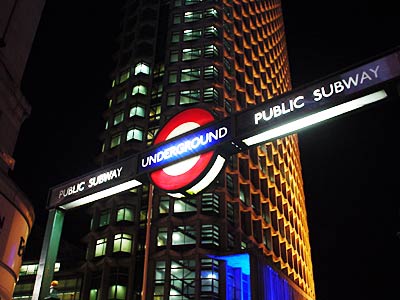
Dive into the World of Piccadily Tube station

Piccadilly Circus tube station is one of the magnificently constructed tube stations on the London Underground positioned directly underneath the Piccadilly Circus itself, with every corner designed as an entrance. The station is located between the Leicester Square and Green Park on the Piccadilly Line and between the Oxford Circus and Charing Cross on the Bakerloo Line.

History
The station got inaugurated in 1906 on March 10 with the platforms designed by the Great Northern, Piccadilly and Brompton Railway (now known as Piccadilly) and the complete station was designed by the Waterloo and Baker Street Railway. Previously, it had a surface booking hall designed and built by Leslie Green in Central London like other stations. The traffic development before and past First World War indicated that there was an indispensable need to improve and expand station facilities. It was planned to build a circulating area and a booking hall. The circulating area also provided subways for public pedestrian purpose and work began in February 1925 and ended in 1928. All through this process, the builder responsible was John Mowlem & Co. and the architect involved was Charles Holden. The complete complex had cost more than 0.5 million pounds. In two flights, eleven escalators were provided, which served the station with two lines.
The building that had been there was demolished in the 1980s when the new building was constructed at a large scale on the Haymarket and the corner of Piccadilly Circus. Piccadilly Circus offers Bakerloo line platforms which are a unique entity to the network. Its unusual back to back layout is captivating. Both the platforms can bee seen at once from the single tunnel appointing a crossover at the North end of the Station. For southbound Bakerloo Line Trains, the station can act as an intermediate terminus.

There had been a heavily featured video by Sir Paul McCartney for Press. In this video, McCartney is seen walking proudly, boldly and with absolute confidence around the station and stylishly catching a tube train and talking with energized members of the general public. The station is a famous pilgrimage site for McCartney fans interested to reenact the video that is now well known as ‘McPressing’ amongst fans.

Recognized as one of the most scintillating areas in London city, Piccadilly Circus offers outstanding nightlife with the most happening pubs, restaurants, bars, theatre and cinema. The place owns an array of shopping malls and a maze of shops, an atmosphere that is ideal for shopping. Piccadily Circus is the most accessed tube station and is routed in such a manner that it becomes easy to find ways to major streets in the city of London including Trafalgar Square, Soho, Leicester Square and Carnaby Street.


Piccadilly Circus is a hub to a number of luxury hotels and Bed and Breakfast , which offer the comfort of location and world class accommodation at the same time. The Beauchamp and the Buckingham are some of the best Piccadilly hotels situated within the vicinity of Piccadilly Circus Tube Station. Hotel search is not a grueling task in this location as there are several hotels within a convenient reach from this tube station.

Future
In future, Piccadilly Circus would be between Tottenham Court Road and London Victoria stations. More effectively, a new station would have to be constructed under the same levels as now, as a part of major refurbishment of the already existing structures. However, a stop will only be provided at Piccadilly Circus if the Chelsea-Hackney is a part of the London Underground and not apart of the National Rail network there. It is a same scenario with many stations on the offered path in Central London. With the current scenario, the Chelsea-Hackney line is not predicted to be completed until at least 2022.

Wednesday, May 27, 2009

London Hotels with Swimming Pools

London is regarded as world’s one of the most beautiful cities. London is visited by approximately 2 million tourists every year. Tourists who visit London for vacation and pleasure are more likely to stay at hotel with a swimming pool. London is home to several beautiful attractions which make your stay even more pleasurable and enjoyable. World class hotels with first-class amenities can be found near almost every London attraction. Few hotels are famous for their pool side view and finest services. Here are a few of them:

The Milestone Hotel and Apartments - London
The Milestone Hotel is where the word luxury marries hotel. The Milestone Hotel and Apartments is a wonderfully crafted hotel. It has an ambience of English country houses. This stylish hotel is housed within a painstakingly restored Victoria Mansion dating from 1882. The history attached to this hotel is what makes it classy and totally chic. The Milestone Hotel also has a swimming pool for tourists who like to get wet in a while.


The Langham – London
The Langham Hotel originally started in 1865 as Victorian Hotel. Now it is owned by Hilton Hotels. Hilton hotels have bought the Langham and renovated it and made it even more royal and stylish. The Langham is just ten minutes away from oxford tube station. Langham is where Marilyn Monroe stayed in the starting of her career, and the room where she stayed in has a wonderful view of the poolside. The swimming pool in Langham is totally out of the world. And the bar and restaurants are exemplary.

London Marriott Hotel Kensington – London

The London Marriott is located near Natural History Museum. The Marriott has modern design with soothing atmosphere and splendid décor. Amazing thing about this hotel is that it has a seven story glass atrium lobby which is a wonder in itself. If you are looking for a swimming pool, London Marriott has one just for you. London Marriott is a spectacular 5 star hotel and offers variety of services from conference rooms, spa, penthouse, luxury suites, gym, internet connectivity and much more.

Grange City Hotel - Central London


Grange City Hotel is situated near the Tower of London. Hotel is an extravagant 5 star hotel. Not just a luxurious swimming pool, in Grange City hotel you would find conference rooms, penthouse, gym, steam & sauna, spa, beauty therapy too. It is also famous for Koto II Japanese Restaurant, Isis bar and Lutetia Bar & Brasserie. It offers high speed internet facility and is next to several famous tourist attractions like the Tower Bridge, St.Pauls Cathedral, London Dungeon, London Theatres and HMS Belfast.


Rushton Hall Hotel and Spa


The Rushton Hall hotel and spa is the embodiment of sophistication. Every room has a unique design with style and comfort. The dining hall has marvelous lighting and offers a variety of English food and terrific wine cellar. The hotel is surrounded with peaceful countryside which makes it best for business events, weddings and receptions. Rushton Hall hotel was voted the winner of the “Most Excellent Hotel Meeting Venue” for United Kingdom and Ireland 2009. The hotel spa offers facials, massages, manicure and pedicure and tanning apart from the warmth of its natural spring swimming pool.

Le Meridien

The Le Meridien a 5 star super luxury hotel situated amidst the heart of London. It is located in between the city‘s museums and theaters. Regarded as one of the London’s finest hotels, Le Meridien offers a health club, spa and a grand swimming pool for guests to relax. It also has The Terrace Restaurant where the renowned Parisian Chef, Micheal Rostang makes it the most amazing meals.

Tuesday, May 26, 2009

Overwhelming Oxford Circus Tube Station

A London Underground station, named The Oxford Circus Tube Station serves the Oxford Circus at the Regent Street and Oxford Street junction and all the four corners of intersection been equipped with the entrances. An interchange is present within the station between the Victoria, the Central and the Bakerloo Lines. It is well known as the third busiest network and the busiest to the National Rail Service without a connection.

It is positioned between the Bond Street and Tottenham Court Road on the Central line. It is situated between the Piccadilly Circus and the Regent’s Park and between Warren Street and Green Park on the Victoria Line.


History of Oxford Tube Station
On the Central London Railway, the station got opened on 30 July 1900 with Baker Street and Waterloo Railway’s Platforms opening on 10 March 1906. There were separate lift shafts and buildings. The exits from the stations which were the station buildings were built on very restrained plots at either side of Argyll Street and in the south of Oxford Street only to the east of the circus. The stations were constructed originally as completely separated ones and later connected through passages which that were swiftly employed at the platform. To the east of Argyll Street, a Central London Railway building is the popular surviving illustration of the stations created by Harry Bell Measures and an example of a standard Leslie Green structure is the Bakerloo building to the west.

Refurbishment of Station
After a lot of planning and discussions between the two individual operators, a major refurbishment began in 1912. This resulted in the construction of a new ticket hall in Bakerloo station’s basement. The replacement of the Bakerloo station’s lift with deep level escalators took place down to the line level. Through the existing subways with deep level, access was provided to the Central Line. A number of improvements have been made since the outset of this station to keep in check the problems related to overcrowding to avoid difficulties for the commuters.

The refurbishment came into use in 1941 on 9 May with the facility of CLR elevators still available for passengers. By the beginning of the year 1923, this development was also rendered inefficient and to cope with the disorder caused at the station, a second refurbishment had to be commenced. This resulted in employment of escalator’s second set down to the Central Line and turning the CLR building into an exit only. Later in 1928, on 2nd October, a third escalator that led to the Central Line was built leading to the CLR station building becoming an exit only.

On 7 March 1969, The Victoria Line got opened. A new ticket hall was constructed in order to bear the overload of additional passengers under the road junction. To exhume the requirement of a new ticket hall under the roadway, diversion of traffic had to take place for five years on a momentary bridge like structure called as the “umbrella” enveloping the Regent Street/Oxford Street junction. To carry the telecom cables and water mains, services tunnels were constructed precedent the new ticket hall. Construction of the new shafts of escalators that form a link between the passages and the tunnels of the Victoria Line Station with platforms took place from access shafts sunk from the Cavendish Square, Argyll Street and Upper Regent Street.

The station has all the facilities like a cash machine, telephone booths, vending machines, a photo booth and many more.

Attractions
There are a number of attractions near the Oxford Circus tube station. If you have an eye for venturing into the area around Oxford Circus Tube Station take a look at these:
The London Palladium

is amongst the well known theaters in London and it is very closely located. Amongst the museums in London, Handel House Museum

is the one surrounding the Oxford Circus Tube station. There is a beautiful city district called Soho enchanted with beautiful ambience of an array of restaurants and pubs. Regent Street and Oxford Street are the hubs for shopping to give your shopaholic bug a high.

Friday, May 22, 2009

Kooky World of King’s Cross St Pancras Tube Station

King’s Cross St. Pancras tube station on the London Underground network is in the London Borough of Camden, serving both St. Pancras and Kings Cross Station.
An extensive refurbishment had to be performed for the underground part of the station to increase the quantity of commuters through it. The ticket offices were closed for a long period in the main ticket hall until May 2006. The station, after getting expanded will have four more ticket halls, with the fourth expected to be completed in 2009. As a part of the original section of the Metropolitan Railway, the first underground station at King’s Cross was opened in 1863 and was renovated in 1868 and 1926.
There was a devastating King’s Cross Fire on November 18, 1987 in the premises of the station. It was found that the reason behind the enormous fire was a lighted match falling into an escalator room and setting it on fire. It was an unknown phenomenon of fire called as the Trench Effect which ferociously made the fire to abruptly explode causing a death of as many as thirty people. Later, as a result, there were improved and tightened fire safety procedures. Escalators were replaced by wooden steps; a prohibition was laid down on smoking and drinking throughout the city.

Thereafter, an explosion took place in a Piccadilly line train on July 2005, travelling between Russell Square and King's Cross St Pancras and led to death of as many as 26 people. There are a number of places to visit and get an accommodation around Kings Cross tube station like Kings Cross St. Pancras hotels in London. In this hotel, you’ll find unmatched standards of comfort and luxury.
There are a number of facilities available at the station for the purpose of setting you at ease, out of them; some are Cash Machine, Telephone, Taxi Rank, Vending Machines, Toilets, Photo Booth.

Attractions near Kings Cross tube station:
London Canal Museum:


This legendary museum narrates the story of the man made waterways of the city of London, which were the superhighways once, linking industrial midlands and North of England with London city. The museum is housed in a waterside that was formerly ice warehouse constructed in the 1860s for popular ice entrepreneur Carlo Gatti.

The exhibitions:
The exhibitions narrate the story of the canals in London, their design and structure, people, horses and the cargoes they carried. Guests can enter inside a cabin made in the shape of narrow boat and listen about the incredible changes in the lives of people who used to live on boats.

The British Library:


Previously situated in the British Museum, British Library is presently located close to the St Pancras station after the brick building in red was custom-made in 1992 by Margaret Thatcher. The library was first operated in 1999 after its transfer took place. Library’s front is labeled with Sir Isaac Newton’s statue made by Sir Eduardo Palazzo.

John Ritlat Gallery:
This magnificent gallery is placed within the British Library and it stores some of the precious and rarest books and manuscripts including the ‘Magna Carta’. As a matter of fact, John Ritlat Gallery along with British Library stores 12 million manuscripts and books as well as a classical and rarest collection of stamps in the world.

Kings Library:
At the center of the British Library is the Kings Library: a six storey, glass-walled tower. The presentation of this library in the nation took place in 1823 by King George IV and King George III started the collections. There are lectures and exhibitions that regularly take place for public. There also is a café and restaurant in the library’s premises which offer a spectacular view of the Kings library. Some other attractions close to the King’s Cross tube station are: Big Chill House, Pearson Gallery, King’s Cross Chinese Group Center, etc.

If you are planning to take your taste bud to a next level, there are a lot of eating joints around Kings Cross St. Pancras tube station. Some of the coolest restaurants and coffee shops are West Cornwall Pasty Co, Incredible Edibles, Chop Chop Noodle Bar, Café Sorriso, Costa, Megaro Restaurant, St Pancras Grand, Pasta House, etc.


Tuesday, May 19, 2009

Holla Holborn

The name Holborn originates from the name of an underground river Holebourne, a branch of the current underground River Fleet. The tributary was a major route for goods from the Thames into the City and the area was referred to as ‘Holeburnstreete’ in 1249. Most of the buildings here have remained and survived from before the Great Fire of 1666, including the remarkable Staple Inn’s timber-framed façade.


Holborn is an ethnic hub of the legal profession. The historic legal centers, the Inns of Court, were situated here to denote the law as an arbitrator in the fight for power between Westminster and the city. The surroundings and the atmosphere of Holborn are still obtained from the four existing Inns: Gray’s Inn, Lincoln’s Inn, Inner Temple and Middle Temple. The passageways and courtyards of these Inns are a quite pool as compared to the eventful capital. The opulent neo-Gothic Royal Courts of Justice, civil courts are observed in the Strand and Chancery Lane is home to the Law society. The Royal Courts of Justice have a huge impact to terrify and scare even the innocent ones. This legendry court consists of 1,000 rooms and huge corridors, extending up to three and a half miles. Also, being the squadron of London’s Lawyers, Holborn is a workplace for many elite people who were financially sound spilling over the city, lawyers and a few journalists’ dawdlers of Fleet Street.

During 19th century, Holborn was struck with poverty like the rest of East London. Even though the area was attacked by a bomb blast during the Second World War, a number of historic buildings and magnificent architecture survived through the destructive times and escaped enormous destruction. At that moment, Holborn was popular for a quite a different subject– it was the house of London’s most talked about gay brothel. Molly house of Mother Clap was invaded in 1726 and she was sent to the stocks for aiding in sodomy.

Some of the world renowned writers who have resided in Holborn are Zadie Smith and Charles Dickens. Holborn has a limited green area, but during the afternoon, it is all occupied by the lawyers. Public members are permitted in the courtrooms of the Royal Courts of Justice, till the time they demonstrate an acceptable behavior.


Holborn Tube station


One of the underground stations in London, Holborn tube station is located on the Piccadilly Line between Russell square and Covent Garden. It is built at the High Holborn and Kingsway junction.

The station was designed and created by the Great Northern, Piccadily and Brompton Railway on 15 December 1906 with the name Holborn. A new road, cutting south from High Holborn named as Kingsway passed through an area of cleared slums to Strand. In spite of the fact that it was built by separate companies routes were planned and stations were located underground so that services could be interchanged. The junction connecting the High Holborn and the newly made Kingsway was a more prominent position for a station than that decided by the CLR.
The inauguration of the GNP&BR branch from Strand to Holborn station was postponed until November 30, 1907 by construction and design of the subway. Then there was a proposal to enhance the tunnels and make them larger under High Holborn to create new platforms at Holborn station and to abandon British Museum station. This proposal was included in a private bill presented to the parliament in November 1913.

Like a number of other central underground stations, Holborn station underwent a refurbishment in the early 1930s. The frontages at the station were designed and renovated by Charles Holden. A new spacious ticket hall was built and the lifts were removed and an access to four escalators was provided. These are the second largest escalators on the underground. There are a number of local attractions like museums, landmarks, etc in and around the Holborn tube station and for travelers, there are a number of restaurants and hotels that seriously would make a change in your concept of food and accommodation.

Sunday, May 17, 2009

The Art of Fine Dining – The English Way

England is a place that foodies would love to explore. If you like your meal with shining bright silver forks and knives, best of the cutlery then hotels in London have such places where you can sit back, relax, enjoy the pleasurable ambience, listen to some quality music and savor each mouthful.

Listed below are 10 of the best restaurants in London:

English Garden Restaurant – Grange White Hall Hotel

This fine restaurant serves traditional English dishes from a very creative menu called A La Carte menu. You can enjoy your meal on the terrace or at the balconies. If you like your coffee along with that saucer, this is the place for you to go.

Koto II Japanese Restaurant - Grange Holborn Hotel

Koto offers freshly prepared authentic Japanese dishes which include scrumptious Sushi and noodles. Koto’s specialty would be Saki and Japanese beers. Now do you know where to park your car if you want to get high the Japanese way? Yes. You do.

Constellations Restaurant - Grange Holborn Hotel

The Constellations Restaurant on the other hand offers modern international cuisine in a serene atmosphere along with royal personal service. A scene from the movie Spiderman 3 was shot in this very restaurant.

Galvin at Windows – London Hilton Hotel

Galvin at Windows is a real treat to the eye. If you like to have a martini or two while gazing through the London’s skyline Galvin at Windows is the place for you to be. The views are simple awe inspiring. So be ready to splurge, and to get high on life the next time you come to this restaurant.

Junction Bar and Restaurant – Russell Square Hotel

This is the place where you get served with some great wine and lip-smack6ing dishes. The best part is, after you are done with your food, there is a bar to go to. In this classy bar you will be served with some of the most amazing cocktails.


Maze – London Marriott Hotel

Maze is the place for French dining, looks grand, smells totally sweet and the service is second to none. You cannot afford to miss the fig sours, other cocktails are spectacular too. Their 7 course meal off the tasting menu is a complete delicacy.

The Rib Room - Jumeirah Carlton Tower Hotel

The food served at The Rib Room is delicious with a very friendly and affable staff. It is however a so called “pricey establishment”, It would be recommended for a special occasion. A little word of caution though, it’s overpriced but things are a little expensive here. It is surely a place well worth for a treat.

The Ritz London – Piccadilly Hotel

This is a place to go with a special someone. With glitz, gold and glamour it takes you to a legendary and superb dining experience. The décor is just awesome; Ritz is the place for a truly unforgettable dining experience.


The Zetter – St.Johns Square

For a surprisingly filling experience with a wine list that could make you stay there for weeks, The Zetter has a friendly yet professional staff catering to your every need, poshest ambience and décor and reasonable prices.


1880 – Bentley Hotel

The food served is absolutely sublime. To eat there is to be fortunate enough to experience finest dining. The service and the décor match the quality of food, and the place is totally flawless. Make sure you have a taste of spotted dick. No it’s not what you think it is! It is log-shaped steamed suet pudding studded with currants with treacle poured over it.


Here in these restaurants you will experience some of the world’s best delicacies served in immaculate fashion in an out of the world ambience and décor. Explore the wider horizon for foodies because you decide what you eat, you decide where you eat. Bon appetite!

Thursday, May 14, 2009

Dive into the World of Earls Court

Where is Earls Court?

Located in the Majestic Borough of Chelsea and Kensington in England, Earls Court district is a hub of largest indoor arenas and famous venue for concerts. One of the brilliantly constructed underground tube stations is Earl's Court tube station situated in Earls Court. This station is located between Warwick Road and Earls Court Road.


Positioned on the Line of Piccadilly, the Earls Court tube station is between Gloucester Road and Barons Court. It is a very prominent junction of the District Line, with High Street to the North and Gloucester Road to the east.

History of Earls Court

A long time ago, Earls Court was enveloped by market gardens and green fields. In other words, Earl's Court was completely a rural area. The Metropolitan District Railway (MDR), on April 12, 1869, opened tracks through this place in order to extend from its station where an interchange with the West London Extension Joint Railway (WLEJR) was opened.

By the beginning of the 20th century, a lot of competition had risen from the new electric trams and buses. All these developments were wearing down the number of commuters, so the MDR started to switch over to electrification of its services. For about six months, an experimental service was functional in the year 1900 when test trains ran over a section of tracks between High Street Kensington and Earl’s Court. Originally, the electric train services began on 1 July, 1905 in Earls Court.

A bomb damage during the World War II, to the West London Line resulted in the ceiling of this line and the last shuttle ran on 2 October, 1940. This section got reopened in 1946, on 20 December.

A rotunda made of glass was built on top of the entrance of the Warwick Court in the 1960s to comprise the operation room of the station. The Kensington service became a full time service operation in the year 1986, without regards of the fact that the exhibition was open or not. There were some additional rounds of renovation from the District line platforms to a new over bridge which was connected to the High Level Walkway that joins the entrance of both the stations. Earls Court Station is undergoing a refurbishment lately to repair the roof. This work takes place throughout the night at the station.

Attractions in Earls Court

There are some amazing examples of Victorian Architecture in the ward of Earls Court. Many impressive Gardens such as Courtfield Gardens and Brahmam Gardens surround the tube station. They are spectacular ethnic residential squares with a number of properties imposed at the front and traditional railings made of cast iron are enclosed around the Courtfield Gardens. The beauty of these gardens has recently been restored. This refurbishment that took place lately enhances the Victorian ambience and makes it appear more authentic.


In the middle of this area, there is a hidden splendor: UK’s smallest communal garden, “Providence Patch” which got destructed by a V1 flying bomb in the year 1941. A glance of the gardens can be taken through the true passage to entrance in Wallgrave Road.

Earls Court’s most popular attraction has been the Earls Court Exhibition Hall for a long time. It is located on a wasteland that stretches between the local lines of rail. A showground had opened there in 1887 that comprised of presenting exhibitions, entertainments and fairground amusements. The Great Hall once again opened in 1937 by its next owner. It had chocolate and confectionary display and since then it has conducted and hosted countless ceremonies, exhibitions and events comprising of some brand rock and pop acts in the world. Its capacity was raised to a large number with the Grand opening of Earls Court Two by Princess of Wales, Lady Diana, in the year 1991.